Cost & Budget
What Does a £200,000 House Extension Include?
A practical look at how a substantial extension budget is typically spent — and the decisions that shape where the money goes.
MJM Joinery & Building ·
A £200,000 budget is a significant investment, and homeowners rightly want to understand what it buys. There is no single answer — two projects with the same budget can look very different — but the way a substantial budget is allocated follows a recognisable pattern.
This article is general guidance rather than a quotation. Every project should be priced from its own drawings and specification.
Where the budget typically goes
Professional and statutory fees
Architect, structural engineer, and sometimes other consultants such as a quantity surveyor or energy assessor. Planning and building warrant fees are also payable. These costs come before construction and should be part of the overall figure.
Preparation and groundworks
Site set-up, protection of the existing house, demolition, excavation, foundations and drainage. In older properties, existing drains often need to be diverted or replaced.
Structure
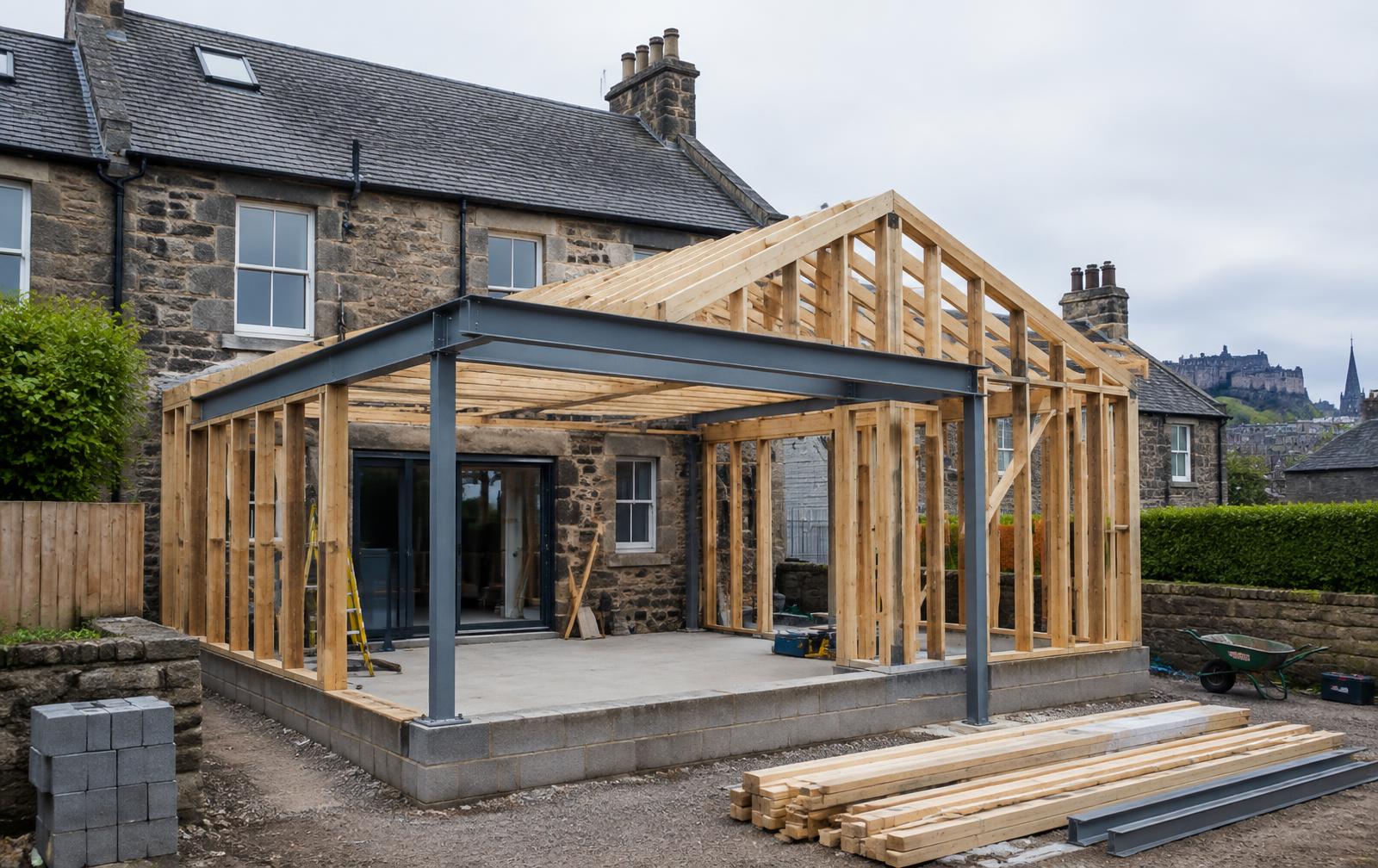
Walls, floor slab, steel beams and the roof structure. Opening the back of a house to create a single large space typically requires substantial steelwork.
Roof, windows and glazing
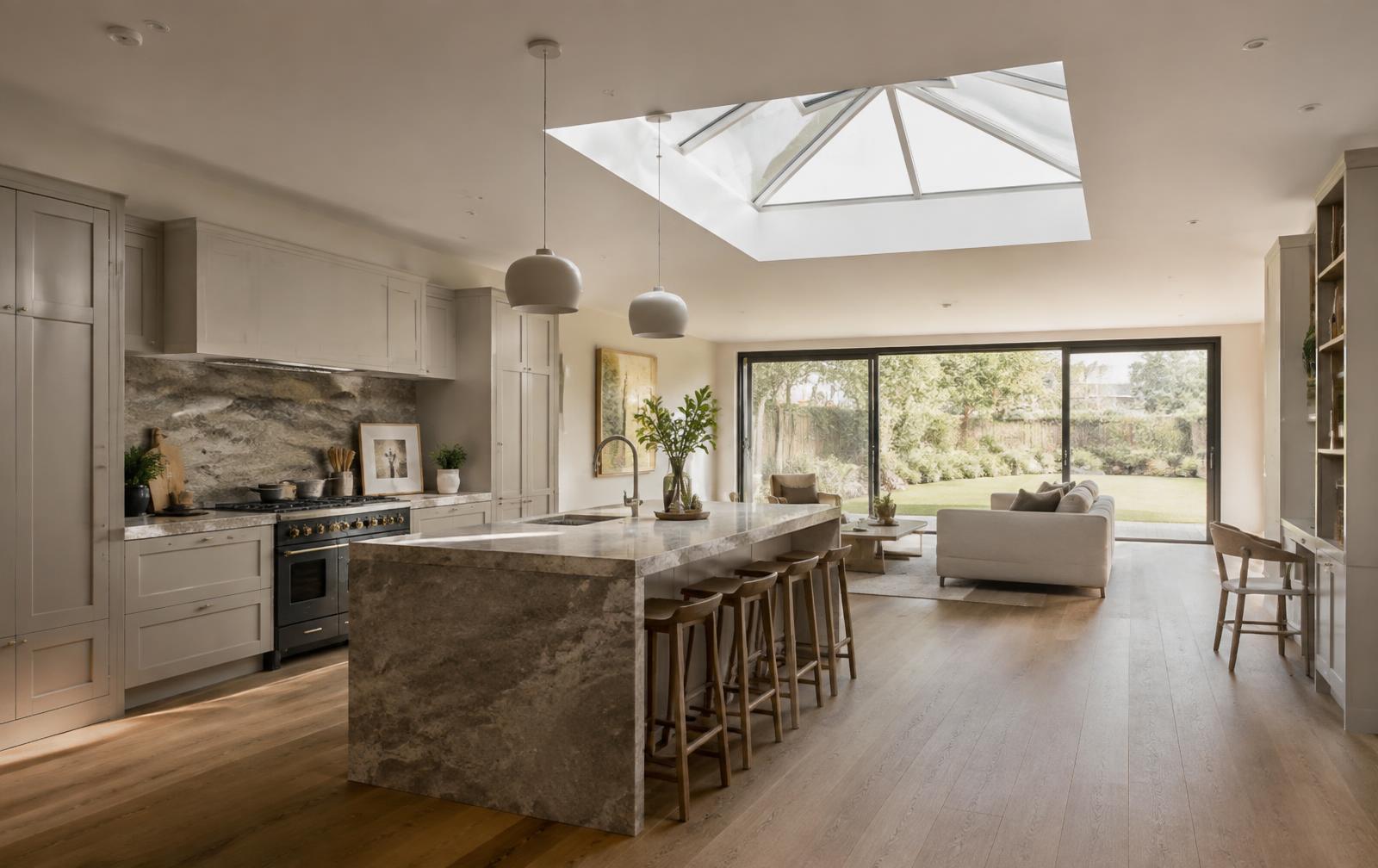
Roof coverings, rooflights, a roof lantern and large sliding or folding doors. In many contemporary extensions, glazing is one of the largest single items.
Services
Heating — often underfloor heating in an extension — together with electrics, lighting, plumbing and ventilation. Existing systems sometimes need upgrading to support the new space.
Internal works within the existing house
A substantial extension rarely stops at the new walls. Reconfiguring the adjoining rooms, moving a utility room or creating a new WC is common, and joining old and new spaces properly matters.
Kitchen and joinery
If the extension contains a new kitchen, it may be one of the largest single purchases in the project. Built-in joinery, such as storage and window seats, adds to both cost and quality.
Finishes
Plastering, flooring, tiling, decoration and lighting. This is where specification choices are most visible.
Contingency
A contingency is not an optional extra. In Edinburgh's older housing stock, it is common to uncover issues that could not be seen at design stage.
What changes the picture
- Size — a larger footprint uses more of every element
- Two storeys rather than one, adding bedrooms or bathrooms above
- Specification — natural stone, bespoke glazing and premium kitchens
- Site conditions — access, slopes, trees and ground
- VAT — make sure every figure you compare is treated consistently
Getting the best value from the budget
- Be clear about your priorities from the outset — space, light, quality of finish
- Decide where you want to invest and where a simpler specification is fine
- Keep design changes to a minimum once construction starts
- Choose a contractor who provides a clear, itemised proposal
If you are considering a project at this level, we would be glad to talk it through. Start your project or read about our house extensions.